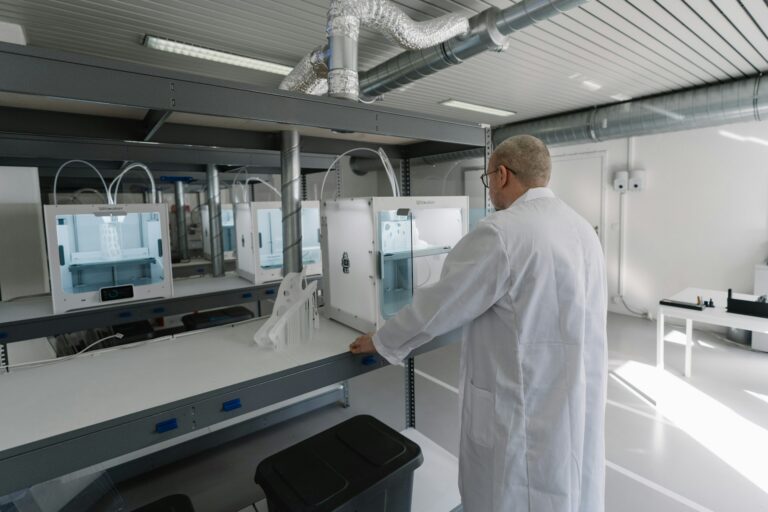

For much of modern healthcare history, treatment paradigms have been built around standardization — one protocol, one dose, one device, one workflow. This model was optimized for efficiency, but not for individual variability. Today, the industry is undergoing a profound shift. With advances in high-resolution imaging, AI-accelerated diagnostics, computational design, and additive manufacturing, healthcare is moving toward a more individualized model that recognizes the anatomical, biological, and environmental differences of each patient.
Personalized medicine is no longer an experimental concept. It is rapidly becoming a foundational pillar of global health systems. Multiple independent market analyses project that the precision-medicine sector could approach the trillion-dollar mark within the next decade, driven by innovations in AI, digital diagnostics, genomics, patient-specific devices, and real-world evidence ecosystems.
A Global Transition: U.S., Europe, and Asia Are Converging on Precision Care
United States
The U.S. has long been a catalyst for precision medicine, supported by strong regulatory guidance (FDA), mature genomic infrastructure, expanding reimbursement pilots, and growing commercial interest in outcomes-driven care. The primary challenge has shifted from innovation to scalable deployment, especially across community hospitals and regional cancer networks that now expect personalized options previously available only at top academic centers.
Europe
Europe is accelerating at equal pace, guided by the harmonized regulatory framework under MDR, strong digital-health infrastructure, and national precision-medicine initiatives in countries such as Germany, the Netherlands, France, and the Nordic region. European health systems — with their emphasis on quality, safety, and uniform access — are integrating personalization directly into value-based care strategies.
Europe also leads in data-privacy enforcement (GDPR) and has created clear pathways for custom devices, clinical evidence development, and digital workflows, making it a critical region in the global precision-medicine expansion.
Asia
Asia continues to show rapid adoption, particularly in Japan, South Korea, Singapore, and Taiwan, where national health systems are investing heavily in AI-enabled imaging, robotics, and patient-specific technologies. Many Asian countries are not constrained by legacy infrastructure, allowing them to leapfrog directly into next-generation personalized workflows, integrating digital manufacturing and cloud-based clinical decision support into routine care.
Across all three regions, the message is consistent: precision and reproducibility are becoming the expected standard, not an advanced option.
Beyond Genomics: The Rise of Patient-Specific Medical Devices
Much of the early precision-medicine focus has centered on genomics and targeted therapies. However, an equally transformative evolution is underway in the realm of patient-specific medical devices, where the device used in patient care is engineered to match that individual’s anatomy.
The combination of high-fidelity imaging, computational design, and additive manufacturing enables clinics to receive custom, patient-matched devices within days. This transformation has immediate impact in:
- Radiation oncology, where accurate positioning and reproducibility directly influence toxicity and clinical outcomes
- Oral and maxillofacial procedures, where anatomical variability is high and impacts both precision and recovery
- Interventional oncology and procedural navigation, where geometric conformity is essential
Patient-specific devices address challenges that standardized hardware cannot — they reduce variability, enhance precision, and align therapy delivery with the patient’s unique anatomy.
Technology as the Enabler: AI, Data Integration, and Global Manufacturing Networks
The scaling of personalized medicine is driven by the convergence of:
AI-Driven Interpretation
AI increases the speed and accuracy of interpreting complex anatomical data, automating segmentation, predicting treatment risks, and assisting clinicians in making more consistent decisions.
Cloud-Based Workflow Integration
Data from any imaging system — whether captured in California, Berlin, or Tokyo — can be securely transmitted, analyzed, and converted into a ready-to-manufacture digital model, enabling a truly global care ecosystem.
Distributed Digital Manufacturing
The rise of certified, distributed 3D-printing centers enables fast, local production of patient-specific devices, minimizing logistics barriers and providing clinics with rapid turnaround times.
This combination makes personalization not only accessible, but operationally efficient and internationally scalable.
Regulatory Alignment and Data Stewardship: Essential Pillars of Trust
As personalization expands, so does the regulatory and ethical responsibility associated with it.
Data-Protection Requirements
Health systems must integrate global privacy frameworks such as:
- HIPAA (United States)
- GDPR (European Union)
- Data-sovereignty and cross-border transfer rules (Japan, South Korea, Singapore, etc.)
Regulatory Expectations
Authorities worldwide are establishing standards for:
- Patient-specific devices
- AI-enabled clinical decision tools
- Additive manufacturing and distributed production
- Quality system traceability and validation
Success requires meticulous compliance, transparent quality systems, and validated end-to-end workflows that maintain safety without slowing clinical timelines.
The Business Case for Clinics: Why Personalization Matters Now
Three forces make personalization a strategic priority for hospitals and cancer centers worldwide:
- Improved Outcomes and Reduced Variability
Patient-specific devices reduce geometric uncertainty, increase reproducibility, and are associated with lower toxicity in radiotherapy and improved accuracy in surgical and interventional workflows.
- Growing Patient Expectations
Patients increasingly seek personalized solutions — from precision-formulated therapies to custom-fitted devices — and healthcare providers who embrace these options signal leadership and quality.
- Streamlined Operations and Predictable Workflows
Even with custom manufacturing, digital workflows often reduce burden on clinical teams by minimizing manual adjustments, rework, and inefficiencies.
The result is a more consistent treatment experience and a more sustainable clinical workflow.
Kallisio: Advancing Global Leadership in Structural Personalization
Kallisio is at the forefront of this global transition. Our Stentra™ platform represents a new class of patient-specific intraoral devices engineered to improve reproducibility and reduce toxicity for Head & Neck cancer patients undergoing radiotherapy.
By integrating:
- Advanced intraoral imaging
- Computational design automation
- ISO-aligned digital manufacturing
- Clinician-validated workflows
Kallisio enables clinics in the U.S., Europe, and Asia to adopt personalization seamlessly and at scale. Kallisio’s mission extends beyond device fabrication — we are building the digital, regulatory, and operational infrastructure required to make clinically validated personalization part of everyday care, globally.
Conclusion: The Future Is Personal — Across All Regions
As we move toward 2030 and beyond, the distinction between “standard care” and “personalized care” will disappear. Personalization will define modern medicine.
For clinics in the United States, Europe, and Asia, early adoption is not only an advantage — it is a differentiator. Embracing patient-specific workflows today positions healthcare systems to lead in a rapidly evolving global landscape.
The transformation is underway.
The question now is which clinics will seize the opportunity to lead it.